Hay to Arthur’s Stone Circular Spin
Wednesday 15th November 2017 11:00am
Starting from - Meet top of Oxford Road car park (HR3 5EQ) is a long stay car park for all vehicle types. http://www.powys.gov.uk/en/roads-transport-and-parking/find-a-car-park/hay-on-wye-car-parks/, HR3 5DG
- 18.8 miles
- Mountain Bike, Hybrid (off road tyres), Hybrid (road tyres), Road
- 2 hr 40 mins
- Steady
- Powys - Powys
- Adults 16+ only
- Women only

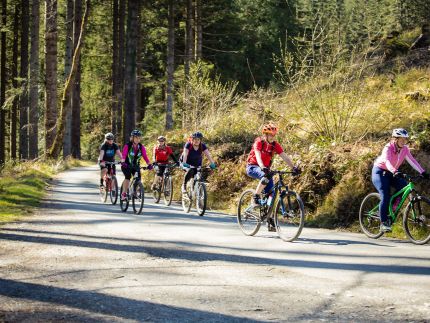
Free, women-only bike rides led by experienced Breeze Champions. They are a great way to get started in cycling or to improve your skills, whether you are a beginner or a seasoned cyclist.
Forgot password
Your details
Forgot password
Your details
About the route
Starting point
Powys Radnorshire
HR3 5DG
We use quiet country lanes with a few unavoidable busier sections. There are some hills to challenge your legs, particularly in the first half of the ride but once we’ve reached the top (shortly after Dorstone), the return journey back to Hay on Wye is more gently undulating.
Please bring a well-maintained bicycle, wear a helmet and appropriate clothing for the weather, carry a drink, a spare tube, puncture repair kit, lock, pump and bike lights if you have them.
There are plenty of refreshment opportunities en-route, so carry some money with you in case we would like to stop for some tea and cake.
HISTORY OF ARTHUR’S STONE
http://www.english-heritage.org.uk/visit/places/arthurs-stone/history/
Arthur’s Stone, a Neolithic chambered tomb, is over 5,000 years old. Today only the large stones of the inner chamber remain, though these were once covered by a long earthen mound.
The area around Arthur’s Stone is rich in prehistoric archaeology. In addition to long barrows and standing stones, flint scatters and stone axes have been found, showing intensive use of the upper Golden Valley during the Neolithic.
The chamber is formed of nine upright stones, with an enormous capstone, estimated to weigh more than 25 tonnes. It was accessed through the side of the covering mound, via the right-angled passage. There is an isolated stone that probably formed part of a false entrance, perhaps providing a visual focus for ceremonies.
The tomb has never been excavated, but similar examples in this region have been found to contain incomplete skeletal remains of several people, together with flint flakes, arrowheads and pottery.
It is unlikely that the monument was built solely as a tomb. Rituals of the ancestors, through whom claims to a particular area of land could be staked, may have taken place here. Built in an area of summer pastures, Neolithic people could have gathered at the cairn on a seasonal basis.
Like many prehistoric monuments in western England and Wales, this tomb has been linked to King Arthur since before the 13th century. According to legend, it was here that Arthur slew a giant who left the impression of his elbows on one of the stones as he fell.
Please bring a well-maintained bicycle, wear a helmet and appropriate clothing for the weather, carry a drink, a spare tube, puncture repair kit, lock, pump and bike lights if you have them.
There are plenty of refreshment opportunities en-route, so carry some money with you in case we would like to stop for some tea and cake.
HISTORY OF ARTHUR’S STONE
http://www.english-heritage.org.uk/visit/places/arthurs-stone/history/
Arthur’s Stone, a Neolithic chambered tomb, is over 5,000 years old. Today only the large stones of the inner chamber remain, though these were once covered by a long earthen mound.
The area around Arthur’s Stone is rich in prehistoric archaeology. In addition to long barrows and standing stones, flint scatters and stone axes have been found, showing intensive use of the upper Golden Valley during the Neolithic.
The chamber is formed of nine upright stones, with an enormous capstone, estimated to weigh more than 25 tonnes. It was accessed through the side of the covering mound, via the right-angled passage. There is an isolated stone that probably formed part of a false entrance, perhaps providing a visual focus for ceremonies.
The tomb has never been excavated, but similar examples in this region have been found to contain incomplete skeletal remains of several people, together with flint flakes, arrowheads and pottery.
It is unlikely that the monument was built solely as a tomb. Rituals of the ancestors, through whom claims to a particular area of land could be staked, may have taken place here. Built in an area of summer pastures, Neolithic people could have gathered at the cairn on a seasonal basis.
Like many prehistoric monuments in western England and Wales, this tomb has been linked to King Arthur since before the 13th century. According to legend, it was here that Arthur slew a giant who left the impression of his elbows on one of the stones as he fell.
Route rating
(0) ReviewsRoute elevation
Who else is on this ride?
Ride leaders
-
Ride Leader

-
Breeze Champion

3 ride participants


Conversation
Register to join the conversation about this ride